

The End of Pop, looking at the story and legacy of Michael Jackson one song and video clip at a time.
1.2: The Wicked Witch of Motown
The songwriting collective that bequeathed MJ and The Jackson 5 four #1 singles was called "The Corporation", and they remind me of the wicked witch in fairy tales who shows up when The Prince or Princess is born and gives some sparkly gift that's also a terrible curse only realized over time. Like a diamond ring that allows the wearer to turn any piece of doodoo they touch into gold, but then every ten years, on your birthday, one of your fingers fall off.
That character in fairy tales is usually mean, and I wouldn't want to ascribe the karmic sin of "evil intent" to The Corporation -- songwriting collectives, after all, have the noblest of goals; championing Art over Artists -- but in the narrative of MJ King of Pop, these guys are playing that oft-forgotten role that sets our hero on his predestined journey. The gift-curse of the gold-doodoo ring, or somesuch.
"ABC" is the second #1 single, but the first that showcases a little of this weird yin-yang golden-doodoo relationship.
So on one hand it's a song that's the epitome of "bubblegum soul"; this is what a songwriting collective should produce: Fun, bouncy, danceable hits. On a musical-enjoyment level, it's brilliant.
But then, on the other hand, from a distance you might think: hey, wait a minute. did that 12-year-old befroed boy just tell the girl (presumably older) "to git up and show him what she can do?" And how "t-t-t-teacher's gonna show her how to get an 'a'?" Huh? What in tarnation is this fresh befroed boy talking about? What does he know enough about to t-t-t-teach anyone?
This is a definite theme from the early Jackson 5 era. There's an empty soulless precociousness that conjures images of Little Miss Sunshine beauty pageants and child labor laws.

Showing posts with label TANathustra. Show all posts
Showing posts with label TANathustra. Show all posts
Friday, February 10, 2012


Wednesday, February 01, 2012
The Quest For The "Negro Hipster" Continues ...
 Not very long ago Gawker did a “Are you a hipster?” quiz. I took the opportunity to inquire about the “negro hipster” (see comments) asking for the more informed to provide examples of such a creature. I was quickly directed to a few candidates.
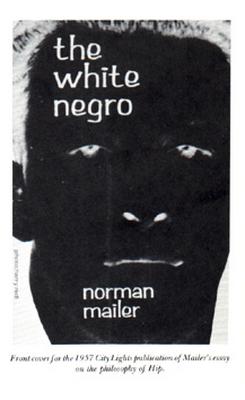
But the premise of my query still remains. Initially I proposed that perhaps the negro hipster doesn’t exist. Such a term might be redundant since so much of “hipsterdom” is about co-opting "hip" black culture (and I don’t say that with an "angry black militant" agenda, I say it like my boy Norman Mailer did, because it's true. Mr. Kamoji knows what I'm saying.)
Not long after, I noticed Joey at Straight Bangin’ inquiring about the same issue.
And now Byron Crawford has also joined the investigation. Although he’s not as focused on the "negro" part.
I recently reached out to Byron since I was feeling a little out of touch with my hip hop contingency. And so I'll use his story as my launching pad...
In covering the fashion, music, and party aspects the most critical element to being a hipster is overlooked. Unlike being a black person, being a hipster is a state of mind. And so the hipster keyword missing in his breakdown is “meta.” Byron submits irony as the hipster common denominator (HCD), I submit that the irony is more of an affectation. It is the flag for meta. For intelligence.
Byron ironically notes the hipster love for non-racist racism. But hipsters aren’t actually mocking black people (or other minorities). They’re actually mocking people mocking people that mock people mocking black people. Which, I think, still means they’re mocking black people, but over drinks you could get an argument, and there’s no way you could pin them on it.
Byron accurately points out what hipsters think is ironic, or funny. But it’s not really funny. It's meta-funny. It’s ha-ha funny. It’s acknowledge this funny. It’s "smart. " It’s a blogger. It’s the ugly-duckling late-blooming swan. It's Dave Eggers. It’s passive-aggressive. (probably went a few terms to far here)
Hipsters are all about post-modern, post-ironic. They are acutely self-reflexive and self-conscious. They are a byproduct of the information generation. There is no longer any external advantage to be gained if we all have access to the same information/power. So the end result is to look internal. To go meta. This sensibility, more than anything else, may be the distinguishing characteristic for a hipster. It is the essence of the “cool” that fuels the hipster locomotive. And this coolness translates to music, fashion, and partying in many ways, as demonstrated by Byron's great hipster-bingo chart.
(As a related thought, but one too involved to explore in this post, I also see hipsters representing a break from the Christian morality of previous generations, to a more Nietzschean worldview. The hipster sensibility springs from a "will to power" value system, as opposed to a judeo-christian (generally speaking) value system. Hipsters like niche. They like "individual", which is essentially the ultimate niche. This is notwithstanding the fact that "counter-culture" always eventually morphs into "culture" thereby undermining its own agenda. So they turn away from the external crutch of religion and look to themselves. Sort of an ironic self-help generation.)
I find the racial underpinnings evidenced in the hipster sensibility fascinating because I believe they represent progress. Hipsters handle race in a whole different way. A way that would be foreign to any previous generation. Vice, a prime source for hipster gospel, believes race is a dead issue. I think hipsters think the same way. They’re both wrong of course. But to have that adamant belief circulating amongst our young whipper-snappers is indicative of a new era of race relations. In many ways, because of "the hipster" and our new racial epoch, The Assimilated Negro concept is dated (luckily for me, most of us are dated in this regard, so I still have plenty of potential readers who won't write me off for being old-school). Plus since I’m meta enough to acknowledge that deficiency everyone can still appreciate the fruit of my loins. I mean the fruit of my toils, err labor. You know what I mean.
Now what I was talking about. Oh right, me. Oh wait, no, hipsters.
Hipsters are our first graduates from the school of racial equality (SORE). They are our first look at a new generation. Of course they have gook on their heads, look a little underdeveloped, and generally make you say ewww (which, by the way, is the new "make you say hmmm"). They have issues. But the thing is none of those issues are race issues. You think Blackface Jesus is a product of "old-school Jim Crow" sensibility, or is he a product of "I could give a fuck about this race shit" sensibility. I'm guessing the latter. And if I'm wrong I guess I'll kick his ass later.
So I guess, even though I'm no hipster, I'm down with hipsters. I think it's the artist in me. Because while the fashion and music may be ephemeral, I think the sensibility, the "mind of a hipster" is here to stay. And I'm saying that, like, totally unironically. Seriously. No meta-irony here at all.
Seriously. Stop looking for meta. It's over.
Monday, September 12, 2011
No Homo and the Evolution of Tolerance
 (ONLY A FEW WEEKS FROM NEGROPEDIA
 ON SALE DATE. MANY VAINGLORIOUS PLANS IN THE OFFING. WE GOT A PRE-ORDER WIDGET TO THE RIGHT HERE--->> AND NEW HOT FIRE CONTENT COMING. BUT FOR JUST A LITTLE WHILE MORE WE REPUBLISH SOME TAN CLASSIC POSTS (i.e. ONES WITH COMMENTS and CONVERSATION ON THEM!!) ... SO IN THE MEANTIME, IN-BETWEEN TIME, HOLLER AT YOUR BOY, STOCK UP ON CANNED GOODS AND PREPARE FOR THE REVOLUTION!!!)
Jonah Weiner, who serves as one of the hip hop/urban music ambassadors for Slate, has a solid point-of-entry piece on the "No Homo" craze in hip hop (and beyond, since the term has by-and-large crossed over into more of a pop cultural phenomenon). His point, essentially, is: yes, saying "no homo" is still homophobia; but it's a lot better than what used to be status quo in hip hop.
Both those things are true. But, just like when racial or religious or *any* sort of intolerance needs a firmer hand, or at least noting that we are only scratching the surface of a much more profoundly complex issue, I think that's called for here. Because honestly, we need to be further along, and I say that mostly from the spirit of being a fan and hip hop urban-culture enthusiast.
Coates at the Atlantic has run some harsher words over this before. And been much more pointed about the problem. It makes me briefly wonder if Jonah, and/or Slate as proxy, can only approach with a certain cavalier attitude because it's not *their* issue so much. Maybe The Root and Skip Gates need to be slamming the door on this a little harder. Because while i don't actually cry, I do think about shedding a tear or two -- i feel the emotional swelling (no homo) -- when considering the rampant homophobia and ultimately, hypocrisy of intolerance, when I think about all the rappers and artists and *Heroes* who have brazenly been hateful to a group of people. It's really no different than your daddy being a racist.
Jonah opens his piece with the both brilliant and obvious example of Kanye. Specifically mentioning his rant about homophobia, that came a little prior to his "george bush hates black people" comment. Which got a lot more pub. He notes the anti-homophobia rant for its unique anomalous nature; no one else has really come out of the closet in such a bold declarative way on the homophobia issues in hip hop (and hip hop serving in some sense as proxy to black culture here).
But the more direct attack and implication is to consider Kanye extending the George Bush comment in this way: "George Bush doesn't care about Black people, Black people don't care about homosexual people. (Homosexual people don't care about vaginas, but that part is neither here nor there.)" Such a line might have framed the tradition of (American?) intolerance in a more comprehensive light.
In any event, i wonder about proprietary issues when righting a wrong. Correcting an error. Obama challenging black folk is different than Bill Clinton. An old-wave feminist doing the same to women, is a similar formulation. Rappers and black people need to be more forceful and demanding in this zone. Because we are losing when we reject ourselves in this way.
Which segues to some of Jonah's extended premise in his piece. A sense of humor/jokes as indicator of progress, movement towards truth.
This makes sense in the realm of racial and sexual identity politics. Black people make black people do this and white people do that jokes. Men and women make men do this and women do that jokes. "No homo" is in fact often a funny addendum. If you can insulate yourself from the hateful part of it all, it's an amusing pithy little phrase. And certainly when used to access the even broader construct of masculinity, femininity etc., it can bring a smile. Of course, that shows the "no homo" isn't even actually about "homos" any more. But what we consider masculine and feminine. The Katy Perry "ur so gay, and you don't even like boys" sentiment. Kanye and many famous "tough rappers" are probably a little removed from knowing how to fix a car that broke down on the highway, chop down a tree and start a fire, fist-fighting, but know about the latest fashion-designers, getting pedicures, etc. No homo?
But as any dysfunctional comedian will tell you, the sense of humor, comic relief, is sourced by a sense of detachment. ironic distance. you/we couldn't make jokes about black people for a long time, because it was too raw and serious and immediate. The wounds were still open. Then they scar over, and it gets a little easier. And now, shoot, we almost can hardly tell it's there now with all the cosmetic surgery we've enlisted *cough*.
So that's progress. But again, point of entry. There's a narrative of tolerance here. Where are we progressing from? How did the story begin? Why was hip hop culture so invested in hating others in the first place? I sense this racial issue, like so many others, is a gateway to larger American or human issues. In this case my suspicion is that when we have been abused we want someone else to at some point experience the same pain/abuse. We want to be empowered by damaging someone the same way we felt damaged. If we stop and *pause* and think about it, such logic doesn't make sense; all of these abuses and wrongs are circumstantial. You can never inflict the same pain, only the particular pain for those particular people/circumstances. If you as a father abuse your son, he doesn't know the abuse you received from your father, his grandfather, any more intimately. He only knows the pain he's receiving from you. This is why the Golden Rule works practically, not only as a morally idealized notion of the universe. We can't transfer our rationalized selves, which is what the psychological scars from abuse are. There's the immediate pain (or joy), and then how we live with it and synthesize it into the new us that emerges from the experience.....
I've sprawled out into deeper waters, and want to stay swimming safely in this smaller pool.... so, no homo. i guess, much like with women, we just need a "homo" rapper who through the sheer force of his will makes all the jokes and lines premised on intolerance, obsolete.

The Changing Face of Hip Hop Homophobia [Slate]
Saturday, May 22, 2010
Missing From How To Make It In America: Skills

I'm on the fence with all the "Lifestyle Porn" programming. (y'know, Sex & The City was like "Blondes", Entourage was like "Babes" or "Celebrities", How to Make it in America is "Interracial") Like porn, there's a whiff of something cheap and pungent about it. Then again, it's porn. Anyone you interact with has probably just finished using some within the last 48 hours (too soon?).
Wednesday, August 12, 2009
Quotable Nietzsche: Why TAN Is So Wise
 (more and more feeling like TAN is trending towards a meaning closer to that of "The Assimilated Nietzsche" over "The Assimilated Negro", but then any minority rising to power is Nietzschean, so yeah, makes sense ... anyFried, more/excess is coming...)
"How much truth does a spirit endure, how much truth does it dare? more and more that became for me the real measure of value. Error (—faith in the ideal—) is not blindness, error is cowardice ... Every attainment, every step forward in knowledge, follows from courage, from hardness against oneself, from cleanliness in relation to oneself ... I do not refute ideals, I merely put on gloves before them."
~~
"Under these circumstances I have a duty against which my habits, even more the pride of my instincts, revolt at bottom, namely, to say: "Hear me! For I am such and such a person. Above all, do not mistake me for someone else!"
~~
"My practice of war is formulated in four principles: First: I only attack causes that are victorious,—I may even wait until they become victorious. Second: I only attack causes against which I would find no allies, so that I stand alone—so that I compromise myself alone ... I have never taken a step publicly that did not compromise me: that is my criterion of doing right. Third: I never attack persons,—I avail myself of the person merely as a powerful magnifying-glass that allows one to make visible a general, but creeping and elusive calamity [...snip...] Fourth: I only attack things when all personal differences are excluded, when any background of bad experiences is lacking. On the contrary, to attack is to me a proof of goodwill, sometimes even of gratitude. I honor, I distinguish therewith by associating my name with that of a cause or a person: for or against—that makes no difference to me at this point.
- all quotes from Ecce Homo: How One Becomes What One Is
(no homo?)
Wednesday, July 01, 2009
Um, Maybe We Should Just Hand Hip Hop Over to the Ladies?
What does that mean exactly? I don't know. Maybe it's sexist. Maybe it's just a headline. But this female emcee (her name is "Invincible") I just got put on to prompts some thoughts on the subject of hip hop's proprietary gender issues:
First off, I'm sure I'm under-informed, but this is the first caucasian female i've seen with a *hardcore* hyper-lyrical flow. I haven't parsed the lyrics to give it a real grade, but it's the first time I've even felt compelled to. Now we know here on TAN, "a white chick is just light-skin". And we know they've quietly-but-surely been part of a renaissance for the beat-boxing arts. But flow? Like a Black Thought, or a Kweli, or a Jean Grae? Holla.
Now I'm sure she's pissed about the "white girl rapping" angle, because any interview/article/blog is going to want to discuss it, and she will be dealing with that forever (the youtube blurb indicates there's plenty of backstory in this regard already); but in terms of the whole Asher Roth a-solid-white-rapper-is-better-than-a-solid-black-rapper hip hop affirmative action plan, this girl kills that for white guys because if your average white rapper is just a better marketing proposition than your average black emcee, there's little question a white female is better than both of those options (all else being equal).
But that's all sort of tongue-in-cheek blog talk. Hip hop heads are over the white-black culture issues, they abide by the microphone. And the real bullshit is still entrenched in gender. Hip hop needs some mf'ing women in positions of power. That means behind the scenes, of course. But also artists that command respect amongst their peers (I can already visualize the eyebrows raising, the blunts falling to the ground, as this girl spits hot fire).
Once hip hop got embraced by pop culture, it wasn't about racism holding the culture back; it was the f'ing sexism. Because even the "conscious" artists were kinda-sorta misogynists. And homophobic.
First off, I'm sure I'm under-informed, but this is the first caucasian female i've seen with a *hardcore* hyper-lyrical flow. I haven't parsed the lyrics to give it a real grade, but it's the first time I've even felt compelled to. Now we know here on TAN, "a white chick is just light-skin". And we know they've quietly-but-surely been part of a renaissance for the beat-boxing arts. But flow? Like a Black Thought, or a Kweli, or a Jean Grae? Holla.
Now I'm sure she's pissed about the "white girl rapping" angle, because any interview/article/blog is going to want to discuss it, and she will be dealing with that forever (the youtube blurb indicates there's plenty of backstory in this regard already); but in terms of the whole Asher Roth a-solid-white-rapper-is-better-than-a-solid-black-rapper hip hop affirmative action plan, this girl kills that for white guys because if your average white rapper is just a better marketing proposition than your average black emcee, there's little question a white female is better than both of those options (all else being equal).
But that's all sort of tongue-in-cheek blog talk. Hip hop heads are over the white-black culture issues, they abide by the microphone. And the real bullshit is still entrenched in gender. Hip hop needs some mf'ing women in positions of power. That means behind the scenes, of course. But also artists that command respect amongst their peers (I can already visualize the eyebrows raising, the blunts falling to the ground, as this girl spits hot fire).
Once hip hop got embraced by pop culture, it wasn't about racism holding the culture back; it was the f'ing sexism. Because even the "conscious" artists were kinda-sorta misogynists. And homophobic.
Tuesday, June 30, 2009
Michael Jackson RIP: "I Want You Back"
"The End of Pop", looking at the story and legacy of Michael Jackson one song and video clip at a time.
1.1
It seems appropriate to start at the beginning; the first single from The Jackson 5 on Motown, "I Want You Back". A song about the most human of emotions: regret. And not regret for a loss that seems preordained by god, but human error. This isn't a hurricane that tore through town. It's not an accidental car crash. It's not having to leave abruptly for an unexpected job opportunity or to serve in the Army. It's the concession of a proactive conscious mistake: I was an ass, I fucked up, I'm sorry, I want you back.
regret is a funny emotion, it appeals to what presumably distinguishes us from chimps. we have ambition. we dream. we aspire. we try to understand love.
this was the sentiment mined by Eternal Sunshine of the Spotless Mind, one of the most emotionally resonant movies of me and MJ's lifetime. "The world forgetting, by the world forgot." Or Nietzsche's, "Blessed are the forgetful, for they get the better even of their blunders."
Knowing how things turned out, now, we can wonder what Michael might have given to forget. But what would he/we have lost if he forgot? in the case of love, and specifically, relationships, there's something that feels so inevitable about remorse. we regret doing. we regret not doing. what can ya do? would you rather be a chimp? (well, maybe, if it's Bubbles)
Monday, June 22, 2009
In Search of Negropedia Brown...
 Well, last couple weekends I tried out the "Negropedia Brown" concept on Gawker.
On paper, the idea is this: there remain "ethnocultural mysteries", which is to say the issues of racial inequality still exist in this country (c.f. Barack's race speech). Particularly in certain institutions, media, for example.
And I've always been a big fan of the "Encyclopedia Brown" boy-detective mysteries. So wouldn't it be sorta cool to use that conceit to explore these "ethnocultural mysteries". It's a more creative and fun way to dig in on a touchy subject, perhaps wag your finger at The System. Harkening back to childhood storytelling can soften what often comes across as harsh sentiments.
So far I've done three cases:
Case of Will Leitch and the Burning Q-Tip
Case of Jay-Z and the Undead Auto-Tune
Case of Vanity Fair and the World White Web
Unfortunately, the execution hasn't lived up to the dream in my head. Primarily, as I see it, because the answers to Encyclopedia Brown mysteries were simple, succinct, and definitive. I haven't managed to recreate the same effect of suspenseful storytelling leading to a clear satisfying conclusion.
I'm posting this cause I'm going back to the lab with Negropedia Brown. I believe strongly in creative transparency and crowdsourcing, and want to get more of "The Process" on TAN; especially if I'm outsourcing the product anyway. So this a post/space for any thoughts, suggestions, and for referring people to the samples.
There are certainly other variables at play: Is referencing Encyclopedia Brown already making for a very niche group (do kids today or even young adults remember/revisit those stories; they seem classic to me, but maybe not)? Does the complicated nature of race totally short-circuit any attempt to have satisfying answers? i.e. when we solve the mystery of race at-large then you can broach this. How does "turn to the back of the book" storytelling work on blogs/the internet? And how much does timeliness and news relevancy play a part-- the first and third cases above were not timely at all. All this before even getting to the nuts-and-bolts of the actual writing.
I still think the seeds are there for something very very cool. It might play better as video or sketch where a character can better translate the mood/tone. Maybe it works better as a cartoon, a la Boondocks. Maybe it's just one of those ideas that doesn't get all the way *there*.
If you have thoughts on any of the above, feel free to share. You won't hurt my feelings. And if you have the notion that gets it right, you're totally in on any byline, $, etc. I just think there's upside, style and substance potential. And so many ideas get shelved and forgotten I wanted to give this one some special attention.
xo,
TAN/Negropedia Brown

Illustrations by the illustrious Brandon.
Tuesday, June 16, 2009
Will 'Keeping It Real" Ever Go Right?
One of my favorite sketches from the popular and missed-more-every-second Chappelle's Show was called "When Keeping It Real Goes Wrong". The sketch basically satirized the whole sensibility of "Uncle Tom" and "Keeping It Real" and "Politics of Authenticity/Identity" that can lead to denying your come-up in the world, i.e when success = sellout. And ... well let me not explain when we can watch it; it's only a couple minutes and well worth it:
[quick aside: in my first days at college i was a little notorious for breaking out animated-recitations-of-hip-hop-refrains as non-sequitur answers to normal class conversation, aka rapping in class. so for example, in my freshman seminar, i don't remember if this was the exact line, but imagine something to the effect of:
Teacher: "So, Patrice, what do you think about the summer reading? Could you relate to the protagonist's struggle in Manchild in the Promised Land?"
TAN: "I'LL THROW IT DOWN YOUR THROAT LIKE BARKLEY. YOU SEE THE CAR KEYS??? YOU'LL NEVER GET THESE!!" and then just look at the teacher like nothing out of the ordinary happened. it was pretty much the mid-90s college version of "when keeping it real goes wrong."]
So as with most good comedy, there's some other darker stuff lurking underneath.
[quick aside: in my first days at college i was a little notorious for breaking out animated-recitations-of-hip-hop-refrains as non-sequitur answers to normal class conversation, aka rapping in class. so for example, in my freshman seminar, i don't remember if this was the exact line, but imagine something to the effect of:
Teacher: "So, Patrice, what do you think about the summer reading? Could you relate to the protagonist's struggle in Manchild in the Promised Land?"
TAN: "I'LL THROW IT DOWN YOUR THROAT LIKE BARKLEY. YOU SEE THE CAR KEYS??? YOU'LL NEVER GET THESE!!" and then just look at the teacher like nothing out of the ordinary happened. it was pretty much the mid-90s college version of "when keeping it real goes wrong."]
So as with most good comedy, there's some other darker stuff lurking underneath.
Monday, April 13, 2009
Your Matrix of Morality
this ran on Gawker over the weekend, here's the tease:
Hey baby, what's your major? Philosophy? Oh yeah? Me too. Wait? David Brooks said what?God/Print/Hip Hop/Web2.0/Print/Facebook andPhilosophy is dead??? And then 446 unemployed philosophy majors commented in protest??? Oh, hell no.
So, um, hell yeah, earlier this week David Brooks waxed Gladwellian while filling in for Bob Herbert with a column breathlessly headlined "End of Philosophy." But it was more about "Reassessing Morality." Or as he phrases "moral thinking." Whatever....
[click Matrix or link for the rest]

The Morality Matrix [Gawker]
Previously:
The Melanin Matrix
Hey baby, what's your major? Philosophy? Oh yeah? Me too. Wait? David Brooks said what?
So, um, hell yeah, earlier this week David Brooks waxed Gladwellian while filling in for Bob Herbert with a column breathlessly headlined "End of Philosophy." But it was more about "Reassessing Morality." Or as he phrases "moral thinking." Whatever....
[click Matrix or link for the rest]
The Morality Matrix [Gawker]
Previously:
The Melanin Matrix
Friday, March 13, 2009
Dear TAN: Is Assimilation Bad or Good?
 Send your questions/letters to theassimilatednegro [at] gmail [dot] com.
In this edition: The moralizing of assimilation!
Dear sir,
I came across your website tonight and decided to send you an email, I understand if you are not able to respond, I am sure you get a lot of them.
I will try to get straight to the point. I am 25 years old, white and from the south. For the past year or so I have been using the internet to probe every aspect of race and racism, from every point of view, and from as many eras as possible. But I have never actually contacted any of the authors of these pages, so you are the first one I have spoken to.
I guess I am looking to open a dialogue of some sort. I have so many questions. I get so disheartened, sometimes sick to my stomach, reading articles and viewing clips, and I just need some answers or closure or a ray of hope. Just something to keep me from throwing my hands up and saying this planet is screwed. But like I said I will try to keep this short for now.
I will start with the title of your blog. I think I understand what you are getting at with it, but I still don't understand everything. I was under the impression that whites for a long time would have rather died than allow blacks to gain access to the promises of this country. I may have answered my own question, but am I on the right track in thinking that there is a huge difference between assimilation and equality? As in assimilation has inherently negative connotations? And if that is the case, could you help me understand how blacks view the word assimilation, or rather, what specific points are objectionable? I am familiar with the idea that there are white and black hairstyles, so I am thinking that for example a black person sporting a typical white hairdo is an example of assimilation? I know there are deeper issues than hairstyles, but then again maybe it is indicative of something below the surface?
Ok, hopefully that wasn't too long, but if you can find the time, I would greatly appreciate to hear from you. Thanks for you time.
Sincerely,
Ben G.
~~
Dear Ben G. (like the dog, ruff! ha? uhhhh...),
Thank you for the note. I think your questions get right to the heart of what TAN is about. Let's enumerate for readability and comprehension:
Monday, March 09, 2009
Life Has Three Speeds: Twitter, Google, Facebook
 Farhad Manjoo -- who's been on fire the last few months covering the tech beat for Slate; if there's a popular technology or device you don't know about, he's got your primer -- finally gives Twitter a once-over, and instead of transparently making a pitch for followers like Julia Angwin's at the WSJ he decides to examine the comparison to two other pop technology tools, Facebook and Google.
After giving all the need to know info and background on twitter and the other tools there's not much time/space left to ruminate, but his main *idea* goes deeper than the usual here's-why-this-is-cool rhetoric.
See, everyone's in a tizzy over the prospect of twitter developing into a search-engine of immediate real-time response and news -- usually citing twitterers who broke news and pictures of the Hudson plane crash before any real news people got to the scene. But Majoo wonders if this is filling a void that doesn't exist:
That gets to a more fundamental question: How often does anyone need "real time" information on the Web? Yes, in the first few minutes after a plane has landed in the Hudson, Twitter might be the best place to find news. But its advantage is short-lived....
Google had a coherent story within hours; Twitter had a messy story within minutes. News junkies love the messy, fast story, but lots of us aren't news junkies. Lots of us are OK waiting an hour for coherence.
And I wonder the same thing, and the philosophy major in me is a little sad that he has to shortshrift the question born of us stealing fire from the tech gods: that being, how much speed do we really need?
Now cruising on the road of life, or evolution, it appears human beings have three gears: Twitter, Facebook, and Google.
Twitter is the fastest we can do. Something happens you can let the world know in the time it takes to type 140 characters or less. For those who like a moment to reflect, Facebook is fairly immediate but not as streamlined for REAL-TIME REACTION. And finally you have the "lumbering" google as your vast archive of the timely and timeless. These three tools/technologies developed will give us coverage on basically everything within the space-time continuum aside from the thoughts in our head (hmmm).
So now all that's left is to decide your cruising speed?
Thursday, January 15, 2009
Hudson Plane Crash: When Keeping It Real Goes Right
 Five Fingers On The Hudson Plane Crash
a plane crashed into the Hudson River today, here are some thoughts...
1. Do we want intelligence from our journalists? Watching a couple different channels as they break this news and I'm shocked at how careful the talking heads want to be with their language. It's understandable, but you can't help but wonder how/why/what we're training journalists/reporters for. Do we want them to just be a lens/observation machine? No interpetation. No editorial. Or at least, as little as possible. Do we have those who just "document" in detail, and then "intelligence" people who give us comprehensive analysis/opinions and specialize in that? Sort of how blogs and MSM/newspapers like to position themselves; one's just the facts, the other is trying to crack the case. Is this dynamic an evolution? Doesn't feel like it when you hear intelligent people wasting time and energy picking over semantic packing-peanuts.
2. When Keeping It Real Goes Right! this will surely be the top takeaway of the day, all day: "you know, Jim, we so often we overlook the airplane safety schpiel ... and look, here, the safety schpiel put to good use! The irony of life, that which we choose to ignore and gloss over saves us!!! Yay!!! Back to you, Jim!" The thing is, it's true. We do have a problem with not hyping success at this fundamental human level. For most of us here in the USA, reading blogs and planning Inauguration parties, the fact is that good happens to us a lot more than bad. Even when Bush was in charge. Disasters are averted. People are saved. Lives keep on living. This accident gone right is a brilliant reminder of that.
3. Geese???!?!?! seriously, who knew? I don't know whether to hate them or love them. peep these facts from NBC NY:
Experts said that Canadian geese are one of a pilots worst nightmares.
A 4-pound bird exerts more than 6 tons of force if hit by a plane traveling 200 mph -- some geese weigh up to 15 pounds.
A U.S. Air Force plane crashed during takeoff at Elmendorf Air Force Base in Alaska in 1995 after a collision with geese. Twenty-four people died.
Birds caused another Air Force plane to crash during its approach to a runway in the Netherlands in 1996, killing 34 people.
GEESE??!?!?! Geese have bodies on their conscience! At least 58 of them! There's a corny hip hop slang-as-spoken-by-geese line/joke to make here, but I demur because some geese might jump out and snuff me, yo! I don't even have a plane to protect me, I would be helpless.
4. Good stuff happens in January. Someone needs to do the research on it, but I swear all the good humanitarian stuff happens in January so that we forget about it by the time we start talking about all the cool things that happened this year. My best example of this is Wesley Autrey, the father who jumped on the tracks to save a stranger from an oncoming train. When did that happen? January 2007. Paging Gladwell!! My theory is that the beginning of January is so friggin' cold that everyone is on their best behavior, and/or willing to go the extra mile just to get their blood flowing/get home asap. Or something like that.
5. It's Cool To Be A Survivor of a Plane Crash. Not only does it mean you're alive, but you have a cool story. And it's fairly one-upmanship proof, i.e. you tell about surviving a plane crashing into the hudson from geese attack and even the most obnoxious a-hole can't follow up with, "oh, you know that happened to me too!!!"
That's a cool feeling when you have a story like that.

More Hudson Plane Crash Coverage:
NBC New York
Gothamist
images: twitpic, gawker, gothamist
Tuesday, May 27, 2008
About TAN: Quotable Nietzsche
 Nietzsche would make an hot speech writer, he and Obama would form a nice 1-2 punch. (Incidentally, one of the TAN Commandments is: thou shalt place no gods before Sir Homey Friedrich Nietzsche. Holla!):
Maintaining cheerfulness in the midst of a gloomy task, fraught with immeasurable responsibility, is no small feat; and yet what is needed more than cheerfulness? Nothing succeeds if prankishness has no part in it. Excess strength alone is the proof of strength.
A revaluation of all values: this question mark, so black, so huge that it casts a shadow over the man who puts it down — such a destiny of a task compels one to run into the sunlight at every opportunity to shake off a heavy, all-too-heavy seriousness. Every means is proper to do this; every "case" is a case of luck. Especially, war. War has always been the great wisdom of all spirits who have become too introspective, too profound; even in a wound there is the power to heal. A maxim, the origin of which I withhold from scholarly curiosity, has long been my motto:
Increscunt animi, virescit volnere virtus.
["The spirits increase, vigor grows through a wound."]
Another mode of convalescence (in certain situations even more to my liking) is sounding out idols. There are more idols than realities in the world: that is my "evil eye" upon this world; that is also my "evil ear." Finally to pose questions with a hammer, and sometimes to hear as a reply that famous hollow sound that can only come from bloated entrails — what a delight for one who has ears even behind his ears, for me, an old psychologist and pied piper before whom just that which would remain silent must finally speak out.
This
~ Friedrich Nietzsche
(spit that fire, son!)

Sunday, December 09, 2007

Tuesday, July 31, 2007
The Story of Mr. Racist, The Young Black Boy, and The Well
 A Modern Negro Fable ....
There was once was a wonderful town named Benetton. It was ethnically and culturally diverse; a place where everyone loved each other and got along splendidly. Well everyone except one person: an older white man named Mr. Racist.
Now Mr. Racist was a foul-mouthed contemptible human being. Surely someone neither you nor I would get along with. Whenever he saw people in town he would raise his craggy voice and swear and fling the most despicable epithets at them. He was filled with hate, and over the years it became his only mode of communication. For the most part he would stay to himself, on his farm, raising animals for food, and drawing water from his well. On the occasions he saw someone, he would greet them with the usual slur or slander.
The townspeople of Benetton were a kind and tolerant group, but over time no one could stand Mr. Racist's presence; so for the most part they stayed out of his way and ignored him.
And so things went for years and years.
And then one summer the kind and tolerant town of Benetton decided to adopt a young black orphan boy. And after living in the town for a while it happened that one day the young black boy stopped at Mr. Racist's farm. Upon seeing the black boy, of course Mr. Racist immediately showered him with the most offensive of invective. But as a young orphan boy raised in the kind and tolerant town of Benetton, the boy didn’t even know how to be offended by these racist remarks. He found Mr. Racist highly entertaining, and found it all to be a quirky amusement. And so the boy began to come by Mr. Racist’s farm with more regularity.
And every time the boy visited, Mr. Racist would denigrate him with hate speech. Until one day Mr. Racist asked the boy,
“Hey, you lazy piece of dark dog shit. Why do you come here so much?”
“I like you Mr. Racist. You make me laugh.”
While Mr. Racist’s hate-addled brain could never express it, it was clear that he was growing fond of the boy. After all, the boy was the only one who enjoyed his company. Everyone else in the town ignored or reviled him.
And so it became a tradition that the young black boy would stop by and while Mr. Racist would rant and fuss about the farm, filling the air with the foulest of vilifying vernacular, the little black boy would lie on the well and giggle at Mr. Racist's foolishness.
Then one day the boy visited and the two sat outside as they normally did. Mr. Racist went into perhaps his most virulent tirade, and the black boy was so tickled by what he was hearing that he laughed harder than ever before. And then at some point the boy gave a great big belly laugh, tipped backwards and fell down into Mr. Racist's well.
At first Mr. Racist considered it very typical of a ni**a to fall down the well and impose on him in such a fashion. But after calling into the well a few times, Mr. Racist soon realized he lacked the tools or strength to get the boy out the well himself. What would he do? Mr. Racist thought the boy inferior, but that didn't mean he should die in the well. As humans are wont to do, he liked the boy despite looking down on him.
And so Mr. Racist, for the first time in a long time, left his farm to get help. When he got to the center of town he saw a Puerto Rican lady walking down the street. He ran to get her attention,
"Hey Spic-lady, forget the laundromat for today. The stupid nigga-boy fell down the well."
The Puerto Rican lady, who had long ago tuned out his taunts, paid Mr. Racist no mind.
Then Mr. Racist saw a Chinese couple and tried to recruit them as best he could,.
"Hey Chinkys. Get your rickshaw and some chop sticks or something. The lazy coon-child fell down the well and can't get out.
The Chinese woman, who was oddly aggressive, slapped him for his indecency and told Mr. Racist to get some self-respect; then maybe she’d listen to what he had to say.
Mr. Racist then spotted a black man down the street and thought surely another jigaboo would try to hear him out.
“Hey nigger. One of your little nappy-headed monsters fell down the well. I can’t get him out.”
And the black man, who was somewhat new in town said, “what did you call me?” And then, quite justifiably, started beating up Mr. Racist.
And so it went for days and days with the kind and tolerant people of Benetton ignoring Mr. Racist’s racist exhortations.
Mr. Racist tried different means of relaying his warning; one day he even painted his face black and simulated falling down a well. But for all his attempts, the hate which had long taken control of his heart would not allow him to harness language in a way that was inoffensive to the kind and tolerant people of Benetton; no one in the town ever listened to Mr Racist.
Eventually Mr. Racist tried to get the boy out himself, and while reaching into the well he would slip and fall down to the bottom. And there, in the well, Mr. Racist and the young black orphan boy died together.
And so it turned out that the little town of Benetton had rid themselves of racism, but also their future.
The End.
Moral#1: don't let semantics distract you from what is most important in life. life.
Moral#2: if we demand intelligence from those who speak, so too must we demand intelligence of those who listen.
Moral#3: don't drink water from a racist's well cause there might be a dead ni**a-boy in it.

Friday, July 06, 2007
This Blog Is A Time Killer
 My mortality sickens me. The cold hard female-moustache reality on aging is that it’s a countdown. You are born and the clock starts -- tick, tick, tick -- and at some point the buzzer goes off and the dream will be over. More than god, or love, or American Apparel, this is probably the one thing the most people believe to be true. And it’s not a source of joy or happiness. Sure, the tragedy of it all is good for comedy; but the laughter is always at you, never with you. Whatever you do or say, it’s a joke. Ha. No, seriously. Ha!!
So I don’t like birthdays. And it’s the same way I don’t like funerals. It’s like, duuude, who wants to go to a Sadness Party, y’know? Thinking about it, I might actually prefer funerals. Birthdays are this big charade of happiness, but meanwhile all you really want to do is cry and say, “I’m sorry for your loss. That’s a tough break on those 365 days they took. We’ll get the bastard, I SWEAR IT!”
The thing is, when I go to birthday parties and cry and tell them we’ll get the bastard, I’m not just being nice. I really mean it. I’m going to get that bastard! DO YOU HEAR ME, TIME?? THERE'S NOT ENOUGH ROOM IN THIS TOWN FOR THE BOTH OF US! ONE OF US IS NOT LEAVING THIS WORLD/DIMENSION ALIVE!!
Have I mentioned
Shouldn’t we celebrate birthdays and funerals the same way? One is: “Who’s dead? Let’s congregate.” And the other is, “Who’s closer to dying? Let’s congregate.” Either way, let’s get that Patron popping! Woo-Hoo!
Of course an old white man once told me that another old white man said, “Youth is wasted on the young,
Aging apologists like to point to my poverty, personality, and alcoholism as the source of my depression. Also, my average-sized penis (it's rude to point!). But definitely not my “maturation.” I am in fact getting better with time. But that is where the Criss Angel Mindfreak happens. Because I’m not getting better with time, I’m getting better with experience.
[earnest pause here]
This is what goads me the most about time. The vanity! The chutzpah! Everything we know and do is invested in time. Jobs, relationships, love, hate, it all seemingly fluctuates with time. But no! It’s all a ruse. Or so we hope...
The signs of our disbelief and rebellion are as persistent as the enemy itself. We never act our age. And never-turning-30 is always the-new-20 which is always the-new-47. I’ve been friends with this person for two months, but it feels like years. I’ve been blogging for a year and change, but it feels like forever. I can have sex for six minutes, but it feels like two. It’s all just friggin' numbers
We just have to work on ignoring Time. Separating him from our perception of experience. Either all experience is timeless. Or time only passes when we experience. Regardless, the seconds and minutiae don't matter. And that's what I'm here for, to make sure that prophecy is fulfilled. My "about me" should simply read "Time Killer." Sent here so that we would no longer be burdened by this oppressive institution of aging. The realm of our experience has no boundaries, time or otherwise. We just have to believe it. You could put a chicken in the oven right now, and cook it, and never have to look at the time. You can just experience when the chicken is done.
Go ahead. Try it. Put something in the oven. Maybe a meatloaf. Then forget about time...
Now go back the next "day" and see what you have. If you've been focusing, it should be a nice fresh tasty meat loaf. If it's burned, then try again, but this time THINK HARDER.
Anyage, I've gotten a little lost here, and I have to wrap this up because, uh, well the sun is going down. But just know, this is not the end. We're going to lick this mortality thing! We're going to do it together! And next time you see Time, tell him TAN said he's a dead man.

Related:
Eternal Now (audio) [TAN]
Tuesday, May 29, 2007
Malcolm Gladwell On Genius
 Found this interesting video on The New Yorker's site, it's Malcolm Gladwell speaking on genius. His premise is that there are (at least?) two different kinds of geniuses, one is the type who may arrive at genius via an incredible inimitable moment of inspiration, another is someone who's very smart and arrives at genius after years of focused study.
 I may be a little off on the details there, because I grabbed the link a few weeks back and I can't rewatch the video now. But his "point to help the world" was certainly that we should care more about educating the populace at large such that we have more "very smart" people that can apply themselves to the big problems/challenges in life.
This sort of pigeontails with my theory on genius, that being that we shouldn't view it as a skill or trait that an individual possesses, but more a zone or a place that we enter and leave. Genius, as I see it, is almost like falling in love. We all have the capacity for it, and perhaps some are more predisposed to fall than others, but everyone has their moments.
The real takeaway was Gladwell noting that studies show 100,000 hours of focused study is what's needed to become a master of something. And this translates to about ten years (actually 11.5, but thereabouts).
This makes a lot of sense to me and gives an interesting fixed boundary to work with. If you start working a job at 22, and stay there for ten years, at 32 you should be a master. And filmmakers and artists who start at 20, may hit their stride at 30. And of course you can accelerate or slow down the process according to how much you want to focus. And it highlights how you inhibit your potential in one fieldby spreading yourself across many fields. The phrase "jack of all trades, master of none" speaks directly to this 100,000 hours theory.
So now I'm trying to log my hours spent doing music, or writing songs, or blogging, or my other creative/professional interests. And I'm becoming more conscious of the time I spend doing things. Like, I'm already a master at drinking now, so I can focus my attention on other stuff. Like sex maybe. I might need more hours there.
How about you? In what field are your genius/master hours logged? Where do you need to log more?
100,000 Hours To Genius [New Yorker]
Wednesday, March 07, 2007
Aardvark Monopoly
 I’ve spent a lot of my life trying to outsmart emotions. You can’t. The same way you’ll never beat an aardvark in Monopoly. Sure, you can set up the board and go through the motions, talk a little trash:
TAN: you want to buy Park Place?
Aaron the Aardvark: ...
TAN: Too late now stupid [quickly grabs the dice and rolls]. Park Place is a no-brainer at this stage of the game.
Aaron the Aardvark: ...
Our brains and our heart re-enact aardvark Monopoly all the time. Our brain sets everything up, explains the rules, and always figures to win. Our hearts seem to oblige, glutton for punishment, but everyone knows it might leave the table at any given moment to go smell for ants.
That's why at the start of the game, I always shoot the aardvark in the head. I mean, either way you're fooling yourself right? And there's NOTHING more frustrating than that casual too-cool-for-monopoly-school aardvark indifference. F*CK YOU AARON! I WIN AGAIN!!
Tuesday, February 20, 2007
Best Intents
 The tragedy … I don’t understand. All around us. Heartbreak. Everyday.
The moment when you realize a relationship is not going to be forever, it manifests in different ways:
Joe looked at her, and though he couldn’t quite make out the details in the distance, he saw the end. He felt the heavy sadness return, as it always does.
He smiled. Sometimes a smile is one of the most challenging things you’ll do. We communicate so much without talking. A smile can constitute work. A smile can be a chore. Work is not a 9-5, 10-6, 12-8 thing. It’s 24-hours. It’s not measured by time. It’s a constant opportunity. Work is a transaction. It is a sacrifice of oneself. A crucifixion? ... maybe? ... sometimes?
Smiling for her, at this moment, felt like a crucifixion. He would now ask her if she’s ever seen “The Passion.” She would be none the wiser, even if she saw the film.
"Have you seen The Passion?"
"Yeah, I'm not into violence, but I really liked that movie. It was powerful."
He smiled again and looked in her eyes for any unconscious/subconscious acknowledgment of their tragic dilemma. There was an awkward pause...
[Aside: Instead of déjà vu, the “glitch in the Matrix” could have been awkward pauses. I think in my Matrix, people are like circuits. So instead of being pieces of code, we all make up the circuitry of SUPER DEVICE LIFE. And when we interact with emotion or passion, it creates a charge. That electricity, whether positive or negative, supplies the power to SUPER DEVICE LIFE. One could say "don't live life like an apathetic impassive dead battery," but sometimes it's totally appropriate to preserve your charge. We are, after all, finite resources. So awkward pauses would be the glitches in the SUPER DEVICE where two circuits are both evaluating their level of juice. Recalibrating their emotional investment. On or off. I suspect if we transcribed the silence found in awkward pauses, we could fill volumes.]
"Yeah, me too."
Joe thought about the prospect of not seeing her again, and it made him feel sad and alive.
Subscribe to:
Posts (Atom)
